Old Town · Wrens Station · Stellaville

Gutter Installation and Gutter Cleaning in Wrens, GA

Gutter installation and gutter cleaning in Wrens cover Jefferson County from the US 1 and Highway 88 junction outward, on property where a gutter is often doing two jobs at once. Out here a good number of runs are not only keeping water off a foundation — they are supplying a tank, a garden line, or a stock trough, and that changes the standard the trough has to be kept to.

  • Screening fitted so leaf and straw never reach the collection line
  • Fall checked along the whole run so nothing settles in the trough
  • First-flush diverters sized to the roof area feeding them
  • Tank overflow routed and screened as its own drainage line
  • Regular Jefferson County route
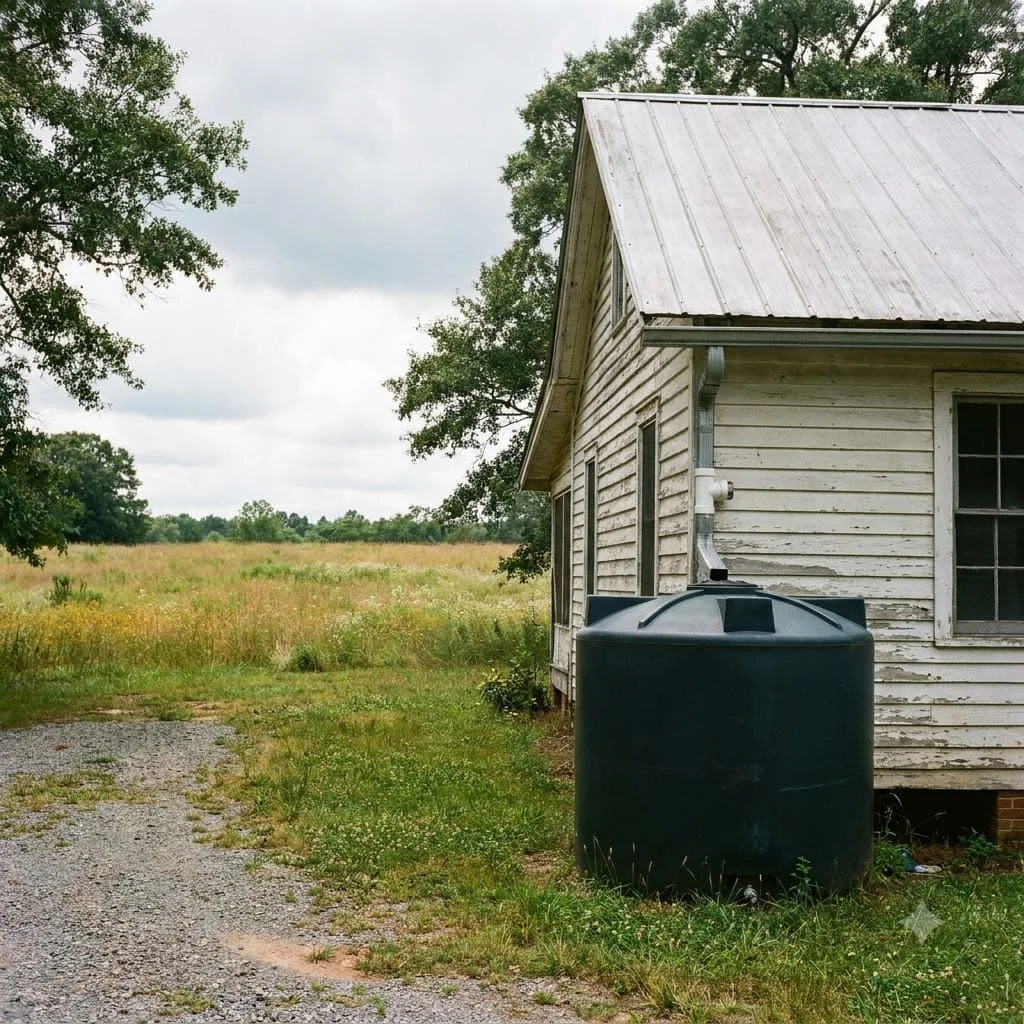
Downspout routed into a rainwater collection tank beside a rural farmhouse
Free EstimatesAugusta & Richmond CountySeamless Gutter SpecialistsWritten PricingNo-Pressure Quotes

Wrens is the largest town in the north of Jefferson County, sitting where US 1 crosses Highway 88 about thirty miles from Augusta. It is far enough out that the housing mixes town lots with working rural property, and far enough out that a lot of what a gutter does here is not what a gutter does in a subdivision.

On property with a well, a garden, or stock, the gutter is frequently a supply line as well as a drain. That is a different specification. A gutter that only sheds water off a roof can carry a surprising amount of sediment without anyone noticing, because it all eventually washes out the outlet. A gutter feeding a tank sends that sediment somewhere it stays.

Collecting Rainwater in Georgia

Rainwater harvesting is permitted in Georgia, and the state plumbing code addresses non-potable indoor use where a system is properly separated from the drinking water supply. Outdoor use — irrigation, garden beds, washing down, stock troughs — is the ordinary case out here and the simplest one to get right.

The part the rules take seriously is cross-connection. Any harvested system that comes near a potable supply must be physically arranged so backflow cannot happen, and that is a plumbing question to settle with a plumber rather than with a gutter contractor. What sits on the gutter side of the line is narrower and entirely practical: what reaches the tank, and in what condition.

Three things decide the water, and all three are in the gutter

Screening keeps solids out. Fall keeps sediment moving instead of settling. A first-flush diverter sends the dirtiest water of each storm to waste rather than to the tank. Get those three right and the tank stays manageable; get any of them wrong and no amount of filtration downstream fully compensates.

Screening: Keeping Solids Out of the Line

A collection run wants continuous screening rather than the outlet strainers that are adequate on an ordinary gutter. An outlet strainer stops a blockage; it does not stop the material that causes water quality problems.

Micro-mesh is the appropriate grade where pine is involved, and around Wrens pine straw is the debris that decides it — thin, stiff, three to six inches long, and able to thread through a coarse screen and pack solid further down. A leaf screen with large openings keeps out oak leaf and lets straw through, which is the worst of both outcomes on a collection line.

Guards on a collection run also earn their keep faster than guards elsewhere, because they are doing water quality work as well as saving clearings. Fitting detail and the usual precondition — that the runs have to be sound first, since guards add weight and wind load — are covered on the gutter guards page.

Fall: Why Sediment Settles Where It Does

A gutter is meant to run at a slight fall toward the outlet, on the order of a quarter inch every ten feet. On a run that only drains a roof, a flat spot is tolerable — water stands in it and eventually evaporates or gets pushed along by the next storm.

On a collection run a flat spot is a settling basin. Fine sediment drops out of slow-moving water and stays there, and then every subsequent storm passes over it and carries a little of it into the tank. The trough looks clear from a ladder because the material is fine and dark and lying in the bottom.

Checking and correcting fall along the whole length is therefore part of setting up a collection run rather than a refinement. On an older gutter that has sagged between fasteners it usually means rehanging on hidden hangers to re-establish a consistent line; on a badly out-of-level run it means re-forming it. Forming runs on site is covered on the seamless gutters page.

First-Flush Diversion

Between storms a roof accumulates dust, pollen, bird droppings, and fine grit. The first part of the next storm carries nearly all of it, at a concentration many times higher than the rest of the rain.

A first-flush diverter sends that portion to waste before the flow is directed to the tank. It is a simple device with no moving parts to speak of, it is inexpensive relative to the tank it protects, and it is the single largest improvement available to most existing systems.

Sizing is proportional to the roof area feeding the line — a rough working rule is one to two gallons diverted per hundred square feet of roof, adjusted upward under heavy tree cover where more accumulates between storms. The diverter needs its own small discharge point, and that discharge should be treated like any other: carried clear of the foundation rather than dropped beside it.

Roof Material and What It Contributes

Worth being straightforward about, because it sets the ceiling on what the water can sensibly be used for.

  • Metal. The cleanest common roof for collection. It sheds rather than holds, and it contributes nothing granular. Metal is common on this side of the CSRA — how it changes the gutter itself is covered on the Harlem page.
  • Asphalt shingle. Sheds fine granules for its whole service life. Perfectly workable for irrigation and outdoor use; normally kept to that.
  • Older roofs of uncertain history. Lead flashings, lead-headed nails, and original paint of unknown age are all worth identifying before collecting for garden produce or livestock. Establish it at the start rather than after the system is built.

Where the Overflow Goes

The part of a collection system that gets designed last and causes the most trouble. A tank that is full is, from the ground's point of view, a roof with no gutter — the same volume arriving in one concentrated place.

The overflow line should be at least the size of the inlet so it can keep up, screened against insects and vermin, and routed to somewhere that can genuinely accept water. That means clear of the tank pad, clear of any foundation, and ideally spread rather than delivered as a stream.

On rural property the roadside ditch or a field edge is often the honest destination, and getting the line there in one piece beats letting it find its own route across a yard. Sizing, fall, and extension detail are on the downspout and drainage page.

Field Dust, Pollen, and the Cleaning Schedule

Jefferson County is agricultural ground, and that puts a load into a gutter that suburban properties do not get. Dust lifts off worked fields in dry spells and settles on roofs for miles around. Spring pollen arrives in quantity across the whole CSRA.

Neither shows up as visible debris. Both settle into the trough as fine sediment, which is why a gutter here can look clear from a ladder and still be running slow, and why a collection line can be delivering discoloured water with nothing obvious in the trough to explain it.

Twice a year covers most properties, three times under heavy pine, and more often than that on any run feeding a tank — including a flush of the run itself rather than only a clearing of the solids. Regular clearing is covered on the pine straw removal page.

Shops, Barns, and Outbuildings

Rural property around Wrens carries a lot of roof that is not on a house, and outbuildings are often the better collection surface — long, simple, unbroken runs with no valleys and no dormers, frequently metal, and frequently closer to where the water is actually wanted.

The other argument for guttering an outbuilding has nothing to do with collection. Where a building sits on a concrete apron, runoff off a long roof lands in a concentrated line at the slab edge, washes out the support under it, and the slab cracks along that line a few years later. In that case the gutter is protecting the slab, not the building.

A pole barn standing in a field genuinely does not need one, and it is worth hearing that said plainly. Guttering everything on a property is not the goal; guttering what has a slab, a doorway, a foundation, or a tank under it is.

What Gutter Work Costs in Wrens

Augusta-market guidance rather than an offer. Per-foot rates match the rest of the CSRA. What moves a Wrens total is total footage on rural rooflines and whether any of the runs are doing collection work.

Work Typical Wrens range
Seamless 5-inch aluminum, installed per foot $8 – $14
Seamless 6-inch oversized, installed per foot $12 – $20
Full replacement, typical 200 ft roofline $1,300 – $4,800
Micro-mesh guards, installed per foot $15 – $25
First-flush diverter, fitted $120 – $300
Overflow line run and screened $150 – $400
Re-levelling a run to correct fall $180 – $350
Outbuilding, shop, or barn guttering $400 – $1,200
Additional downspout, each $120 – $240
Gutter cleaning, rural property $150 – $300
Fascia board replacement, per foot $8 – $18

How We Handle Gutter Work in Wrens

  • We ask what the gutter feeds. A gutter feeding a rainwater tank is built differently from one that just drains, and we set it up accordingly.
  • Proper fall, checked with a level. A quarter inch every ten feet, so no flat spots collect sludge on the way to the tank.
  • Continuous micro-mesh under pine. A coarse leaf screen lets pine straw through, which is the worst thing for a tank.
  • First-flush diverters sized to your roof. Based on the roof area feeding it, not a stock size.
  • We plan the tank overflow. We route and screen it so it doesn’t cause the erosion the tank was meant to prevent.
  • We’ll tell you if an outbuilding doesn’t need gutters. Not everything with a roof does.
  • Hidden hangers every 24 inches. Closer where guards add weight to the run.
  • We clean up the nails. On rural property that gets mowed and driven over, we run a magnet over the ground.

Gutter Services Available Across Wrens

Augusta Gutters Pros treats Wrens as part of the regular Jefferson County route rather than an outlying run. Installation, full replacement, repair and rehanging, cleaning, guards, seamless forming on site, and drainage work are all available here, on houses, shops, barns, and outbuildings alike.

North and east of here we cover Thomson in McDuffie County, Harlem in west Columbia County, Waynesboro in Burke County, and Blythe and Hephzibah on the south side of Richmond County. The full list is on the service areas page, every job type is broken down on the gutter services hub, and sizing and pricing questions are answered in the gutter FAQ. Request a free estimate and we will spec the run for the job it is actually doing.

Where we work in Wrens

Neighbourhoods and Roads We Cover

Augusta Gutters Pros covers Wrens as part of the regular Jefferson County route. These are the areas and roads we work most often — the town itself around Old Town and East Broad Street, the communities out along Highway 88 and US 1, and the rural property running toward Stellaville and Zebina.

  • Old Town
  • Wrens Station
  • East Broad Street
  • Brinson Crossing
  • Cunningham Corner
  • Ellis Plantation
  • Pine Hill
  • Omaha Springs
  • Stellaville
  • Zebina
  • Highway 88
  • Highway 1
Straight answers

Frequently Asked Questions

Do you cover Wrens, GA?

Yes. Wrens sits at the junction of US 1 and Highway 88 in Jefferson County, about thirty miles south-west of Augusta, and it is on the regular southern route for Augusta Gutters Pros. That covers the town itself around East Broad Street and Old Town, out through Wrens Station, Brinson Crossing, Cunningham Corner, Ellis Plantation, and Pine Hill, and the rural property toward Stellaville and Zebina.

Installation, repair, cleaning, guards, and drainage work are all available. A larger share of jobs here than anywhere closer to Augusta involve a gutter that is not only draining a roof but supplying something — a tank, a trough, a garden line, or livestock water.

Can I collect rainwater off my gutters in Georgia?

Yes. Georgia permits residential rainwater harvesting, and the state plumbing code addresses non-potable indoor use where a system is properly separated from the drinking water supply. Outdoor use — irrigation, garden beds, washing down, livestock and stock troughs — is the ordinary case and the simplest one.

What the rules are strict about is cross-connection. Any harvested water system that comes near a potable supply has to be physically separated so backflow is impossible, and that is a plumbing question rather than a gutter question. The gutter side of it is about what reaches the tank and in what condition.

What does a gutter need to do differently if it feeds a tank?

It has to stay clean, and it has to stay full-bore. A gutter that only drains a roof can carry a certain amount of sediment without anyone noticing, because everything eventually washes to the outlet and out. A gutter feeding a tank sends that sediment somewhere it accumulates.

In practice that means three things: mesh or micro-mesh screening so leaf and straw never enter the line, adequate fall along the whole run so nothing settles in the trough, and a first-flush diverter so the dirtiest water of the storm goes to waste instead of to the tank.

What is a first-flush diverter and do I need one?

It is a simple device that sends the first portion of each storm to waste before the flow is directed into the tank. That first portion carries whatever settled on the roof and in the trough since the last rain — dust, pollen, bird droppings, fine grit — in a far higher concentration than the rest of the storm.

On any tank used for anything beyond deep irrigation it is worth having, and it is inexpensive relative to what it protects. A rough working rule is diverting the first gallon or two for every hundred square feet of roof feeding the line, adjusted upward under heavy tree cover.

Does the roof material matter for collected water?

For anything beyond irrigation, yes. Metal is the cleanest common roof for collection because it sheds rather than holds and it contributes nothing granular to the water. Asphalt shingle sheds fine granules for its whole life, which is why shingle-fed water is normally kept to irrigation and outdoor use.

Older roofs are worth asking about specifically. Anything with lead flashings, lead-headed nails, or original paint of uncertain age is not a surface to collect off for garden produce or livestock without knowing what it is, and that is worth establishing before building the system rather than after.

Where should a tank overflow go?

Away from the tank base and away from any building, treated as its own drainage problem. A full tank overflowing is the same volume as an unguttered roof, and it arrives in one concentrated place, which is exactly the situation the gutter was installed to avoid.

The overflow line should be at least the size of the inlet, screened against insects and vermin, and run to somewhere that can genuinely take the water — a spread area, a ditch line, or a route well clear of the foundation and the tank pad.

How often do gutters need cleaning in Wrens?

Twice a year on most properties, three times under heavy pine, and more often on any run feeding a tank. Collection changes the standard because the consequence of neglect is different — a dirty trough on an ordinary gutter is untidy, and on a collection line it is where the water quality problem starts.

Agricultural ground adds a second load most of the CSRA does not have. Field dust in dry spells and heavy spring pollen both settle into the trough as fine sediment rather than as visible debris, which is why a gutter here can look clear from a ladder and still be running slow.

How much does gutter work cost in Wrens, GA?

Seamless 5-inch aluminum runs $8 to $14 per linear foot installed and 6-inch oversized runs $12 to $20, the same rates as the rest of the CSRA. Rural houses often carry more roofline than a town lot, so 160 to 240 feet is common and a full replacement lands between $1,300 and $4,800.

The collection side is inexpensive relative to the tank. Micro-mesh guards run $15 to $25 per foot installed, a first-flush diverter $120 to $300 fitted, and running and screening an overflow line $150 to $400. Guttering a shop or outbuilding to feed a tank runs $400 to $1,200 depending on length and eave height.

Get a Free Gutter Estimate in Wrens

We will tell you what a run needs if it is feeding a tank and what it needs if it is only draining a roof, because those are two different specifications. Written pricing, no obligation.

Call Us Now (706) 441-1723