
5-Inch vs 6-Inch Gutters: What Size Do You Need?
Sizing is usually explained as a rainfall calculation. In the CSRA it is mostly a debris calculation — and that shifts the answer on a lot of Augusta houses that the maths alone would leave at 5-inch.
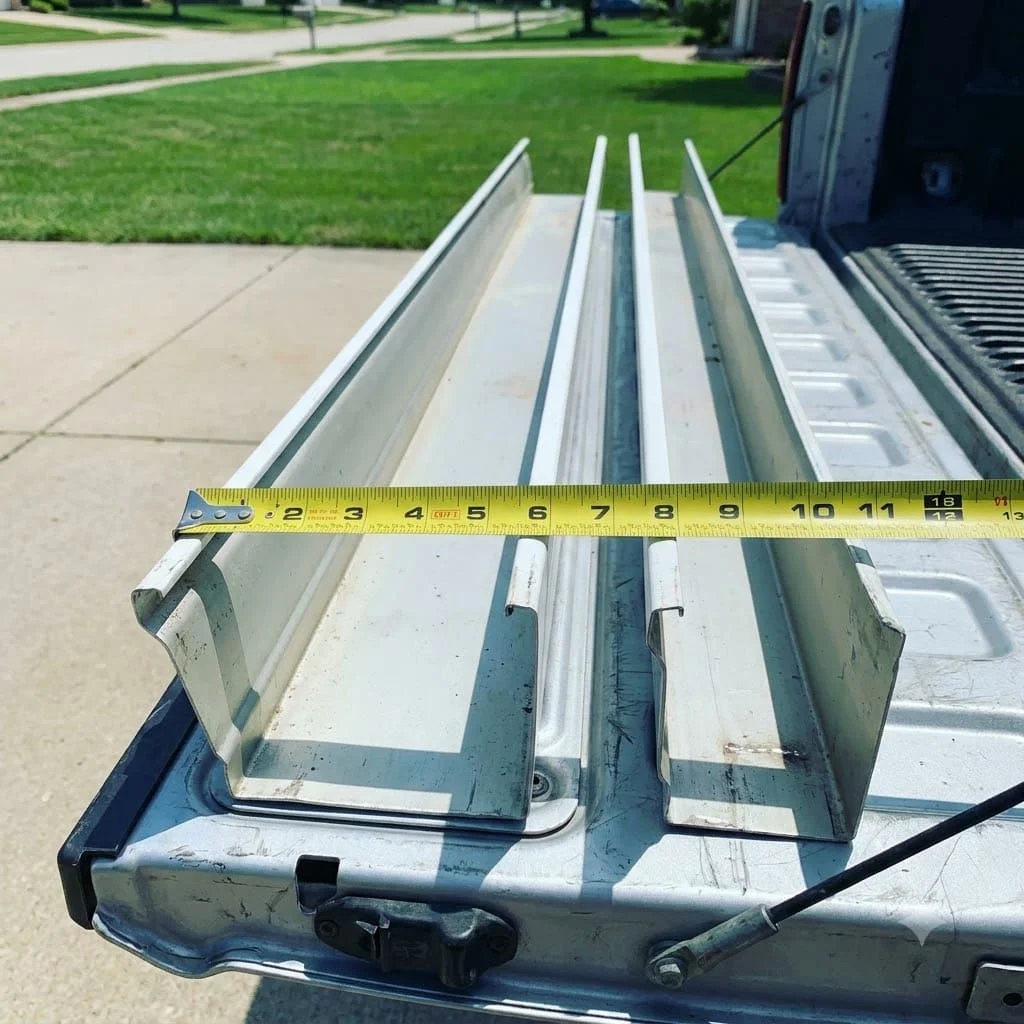
- 5-inch K-style: about 5.9 sq in of cross-section
- 6-inch K-style: about 9.0 sq in — roughly 50% more
- Upgrade cost: roughly $3 – $5 per linear foot
- 6-inch belongs with 3x4 downspouts, not 2x3
Frequently Asked Questions
Should I get 5-inch or 6-inch gutters in Augusta?
Five-inch handles most single-story Augusta rooflines with moderate pitch. Six-inch is worth the extra $3 to $5 per foot on steep roofs, long unbroken runs, large roof areas draining to few outlets, and anything under heavy loblolly cover.
The wider trough matters here for a reason that has nothing to do with rainfall volume: a 6-inch trough with 3x4 downspouts stays functional far longer as pine straw accumulates, because it takes more debris to bridge the opening.
How much more water does a 6-inch gutter hold?
Roughly 50 percent more. A 5-inch K-style trough has about 5.9 square inches of cross-section; a 6-inch K-style has about 9.0.
The bigger jump is at the downspout. A 2x3 downspout gives you 6 square inches of outlet and a 3x4 gives you 12 — double. Since the downspout is almost always the actual bottleneck, that pairing matters more than the trough width on its own.
How much does upgrading to 6-inch gutters cost?
Roughly $3 to $5 per linear foot on top of the 5-inch rate. Five-inch seamless aluminum runs $8 to $14 per foot installed in Augusta and 6-inch runs $12 to $18.
On a 180-foot roofline that is somewhere between $540 and $900 for the whole house. It is one of the few gutter upgrades where the extra spend reliably reduces the maintenance you will be paying for later.
Can I put 6-inch gutters on my existing fascia?
Usually yes. A 6-inch trough is wider and deeper but hangs from the same fascia board, so on most houses it is a straight swap with new hangers.
Two things to check first. The fascia has to be sound enough to carry the extra weight — a wider trough holds more water and more wet debris. And on a shallow eave the wider gutter can project past the drip edge, which needs the roof edge looking at rather than assuming.
Do 6-inch gutters need bigger downspouts?
They should have them, and a quote that pairs 6-inch trough with 2x3 downspouts is worth questioning. Widening the trough while leaving the outlet the same size moves the bottleneck rather than removing it.
Six-inch trough is normally paired with 3x4 downspouts. That combination is the one that genuinely changes how a system behaves under a CSRA debris load.
Are 6-inch gutters harder to clean?
No — easier, in practice. The wider opening gives more room to work by hand, and there is more clearance between the shingle edge and the front lip for a scoop.
They also need cleaning less often for the same tree cover, because it takes a deeper mat of pine straw to bridge the trough and start holding water. The frequency question under Augusta pine is covered in the gutter cleaning cost guide.
Is 6-inch overkill for a small house?
Often, yes. A compact single-story with a moderate roof pitch, plenty of downspout drops and no heavy tree cover is well served by 5-inch, and the upgrade money is better spent on hanger spacing or an extra downspout.
Roof area draining to each outlet is the number that decides it, not the size of the house. A small house with one long run and a single downspout can need 6-inch where a larger house with six drops does not.
Have the Sizing Checked Against Your Actual Roof
Roof area per downspout, pitch and tree cover decide this — not house size. We will measure it and tell you plainly whether 5-inch is enough, in writing and with no obligation.
The Work Behind These Numbers
Read the service page for whichever job this guide pointed you toward — each one sets out scope, materials, and what a written quote should contain.
New Installations
New seamless aluminum gutters formed on site to fit your roofline exactly — sized for Augusta rainfall, not a national spec sheet.
See the service →Seamless Gutters
Continuous runs rolled on a truck-mounted machine at your curb — no sectional joints to split open in a summer downpour.
See the service →Downspout Installation & Repair
Downspouts, extensions and underground drain lines that move water away from Augusta clay instead of into your crawlspace.
See the service →More Augusta Gutter Guides
Guides on the same question from another angle — written the same way, with the numbers in the open.
Seamless vs Sectional Gutters: Which Is Best for Augusta Homes?
Where the seams fail first under Augusta pine, how the two systems compare on installed price, and the four situations where sectional is genuinely the right call.
Read the guide →Best Gutter Materials for Georgia Weather
Aluminum, vinyl, galvanized steel and copper judged against what Georgia actually does to them — UV, heat cycling, humidity and a year-round pine load.
Read the guide →Copper Gutters: Are They Worth the Investment?
What copper costs per foot around Augusta, how it patinas in Georgia humidity, the galvanic mistake that ruins installs, and the homes where it is pure expense.
Read the guide →