
Maintenance & problems · Augusta, GA

Sagging Gutters: Causes and How to Fix Them

A sagging gutter is one of three problems: loose fasteners, a bent trough, or rotted wood behind it. Knowing which one you have is the difference between a $200 repair and a much bigger job.

  • Most common cause: spikes backing out of the fascia
  • Best fix: hidden hangers screwed in every 24 inches
  • Rehang and re-pitch a section: $200 – $400
  • Check the fascia first — soft wood changes the job
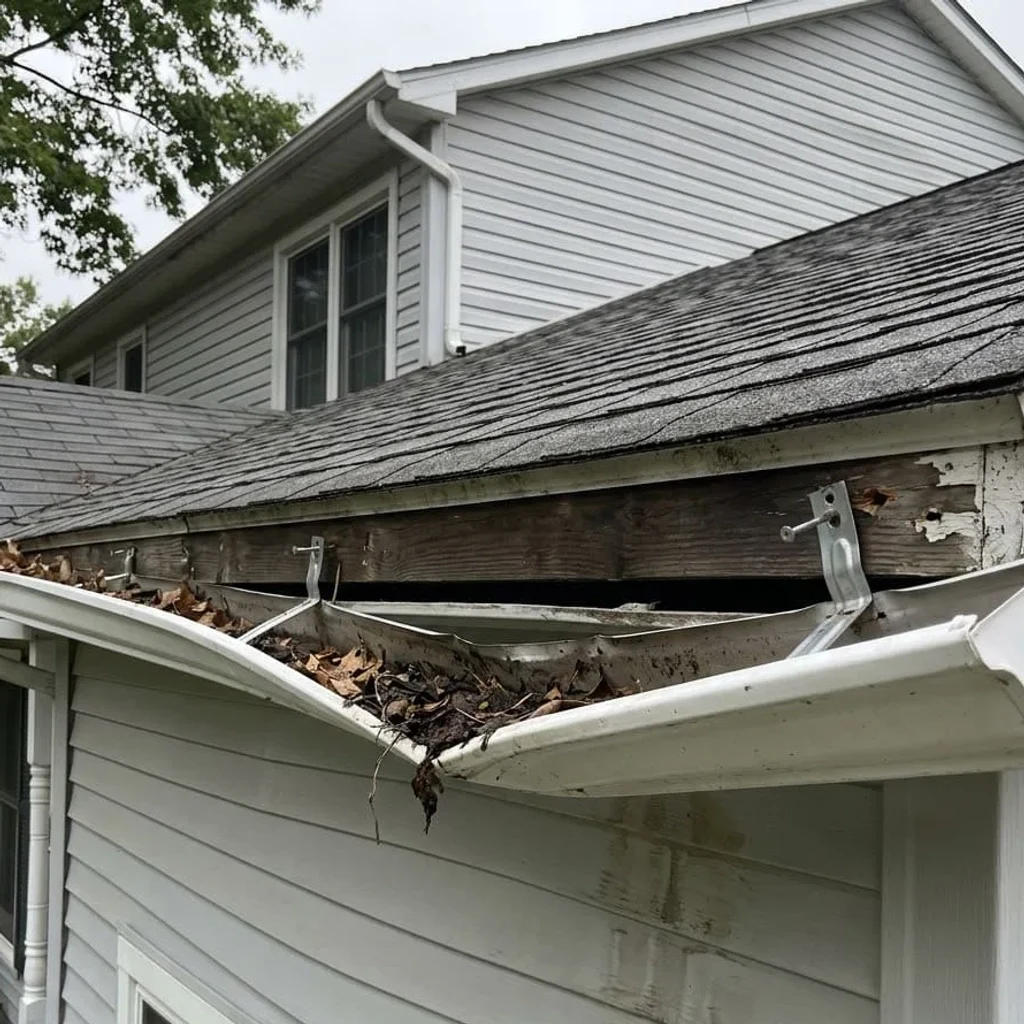
White aluminum gutter sagging and pulled away from a weathered fascia board, with loose hangers exposed, on a vinyl-sided house
Free EstimatesAugusta & Richmond CountySeamless Gutter SpecialistsWritten PricingNo-Pressure Quotes

The Short Answer

Most sagging gutters are caused by fasteners pulling loose from the fascia board, usually old spikes that have backed out over the years. The fix is to rehang the gutter on hidden hangers screwed in about every 24 inches and reset the pitch so water drains toward the downspout.

That works as long as the wood behind the gutter is sound. If the fascia has rotted, the soft section has to be replaced first, or new hangers will pull out just like the old spikes did.

Here is how to work out what is causing your sag, how each cause gets fixed, and what the repair typically costs in Augusta.

Seven Causes of Sagging Gutters

1. Spikes backing out

Many older Augusta homes have gutters hung with spike-and-ferrule fasteners: a long nail driven through the front of the gutter, through a metal tube called a ferrule, and into the fascia. Wood swells in humid summers and shrinks in dry winters. Each cycle loosens the spike a little.

After enough years, the spike slides partway out, the gutter drops, and you often find the spike lying in the flower bed. The Martinez page covers how wet hardwood leaves speed this up on older homes.

2. Hangers too far apart

A gutter full of water and wet debris is heavy. Hangers spaced 36 inches or more apart may hold an empty gutter but let it bow between fasteners once it is loaded. This is common on older systems and budget installs.

3. The weight of wet debris

Pine straw and leaves soak up water and hold it. A clogged gutter can carry many times its normal weight for days after a storm. That load is what finally pulls a weak fastener out. Regular cleaning is the cheapest sag prevention there is — see how often to clean gutters in Augusta.

4. Standing water from bad pitch

If a run is level or tilts the wrong way, water sits in it after every rain. The low spot gets heavier, sinks a little more, and collects more water. It is a cycle that only gets worse.

5. Rotted fascia

Fasteners are only as strong as the wood they are in. When water gets behind a gutter for years, the fascia board rots, and even a new screw has nothing solid to grip. A sag caused by rot comes back no matter how many times the gutter is rehung. The Thomson page explains why the board is so often the real job.

6. Ladders and people

Leaning a ladder against a gutter, or grabbing it while climbing onto the roof, bends the trough and crushes hangers. The damage is often a sharp dip at one spot rather than a long, gentle sag.

7. Storms and falling limbs

Wind, ice, and falling branches can bend a gutter or tear it partly off the house. After Hurricane Helene in September 2024, many CSRA homes had gutters that were pushed back up quickly and never properly refastened. Those runs are sagging now.

Which Problem Do You Have?

Every sagging gutter comes down to one of three failures: the fastener, the trough, or the wood. These checks tell you which.

What you see Likely failure What it means
Spike heads sticking out, or spikes on the ground Fastener Rehang on hidden hangers — usually a simple repair
Long, gentle bow between fasteners Fastener spacing Add hangers and reset pitch
Sharp kink or crease in the metal Trough Replace that length of gutter
Gap between gutter and board, wood looks dark or swollen Wood Replace the fascia section, then rehang
Same spot sagging again after a past repair Usually wood Check the fascia before rehanging again
Sag with standing water, fasteners look tight Pitch Re-pitch the run so it drains

The screwdriver test settles the wood question. If you can safely reach the fascia, press a flat screwdriver into the board just above the sag. Sound wood resists. Rotted wood feels spongy, lets the tip sink in, or crumbles. Check a few inches to each side too — rot usually spreads further than it looks.

How Each One Gets Fixed

Loose spikes: switch to hidden hangers

A hidden hanger clips inside the front lip of the gutter and holds it with a long screw driven through the back of the gutter into the fascia. Screws grip far better than smooth spikes, and the hanger supports the front edge so the trough keeps its shape. Replacing all the spikes on a run at once stops the next one from failing a month later.

Wide spacing: add hangers

Hangers go in about every 24 inches. Under heavy pine, where the gutter carries wet needles most of the year, 18 inches holds better. Extra hangers are inexpensive, and adding them is one of the best value repairs on a gutter.

Bad pitch: rehang and re-pitch

The gutter is unfastened, a chalk line is set with about a quarter inch of fall every ten feet toward the downspout, and the gutter is refastened to that line. On a long run with a downspout at each end, the high point is set in the middle so water flows both ways.

Bent trough: replace the length

A kinked or creased gutter cannot be straightened well. The bent length is cut out and replaced. On a seamless system, that often means a new run for that side, because a patch adds a joint that can leak.

Rotted fascia: replace the wood first

The gutter comes down, the soft section of board is cut out and replaced with new lumber, and the new wood is primed and painted or wrapped. Then the gutter goes back up on hidden hangers. Skipping this step is the most common reason a sag repair fails.

Our gutter repair service handles all five of these. When the trough and the fascia are both worn out along most of a side, rehanging stops making sense — the signs your gutters need replacing guide covers how to tell.

Fixing a Small Sag Yourself

If the fascia is sound, the gutter is single-story, and the problem is a few loose spikes, this is a reasonable DIY repair. Hidden hangers are sold at home improvement stores.

  1. Clean the gutter first. You cannot set pitch accurately with debris in the trough, and a lighter gutter is easier to lift.
  2. Check the wood with a screwdriver. If it is soft, stop. New hangers will not hold.
  3. Pull the loose spikes. Use a flat bar with a block of wood behind it so you do not dent the gutter or gouge the fascia.
  4. Lift the gutter back into position. Rest a level in the trough, or run a string line, to confirm it falls slightly toward the downspout.
  5. Install hidden hangers. Clip each one under the front lip and drive its screw through the back of the gutter into the fascia, about every 24 inches. Do not reuse the old spike holes — offset each screw an inch or two.
  6. Run a hose test. Water should flow to the downspout without pooling.

Call a professional for two-story gutters, long sagging runs, any sign of rotted wood, or a gutter that needs to come fully off the house. Working on a loaded gutter from a ladder is harder than it looks, and a dropped 30-foot run can pull more of the system down with it.

What Sagging Gutter Repairs Cost

These are typical ranges in the Augusta market.

Repair Typical Augusta cost
Rehang and re-pitch a sagging section $200 – $400
Replace spikes with hidden hangers, per run $180 – $350
Replace a damaged length of trough $250 – $600
Fascia board repair behind the gutter, per section $200 – $500
Fascia replacement, per linear foot $9 – $18
Replace one elevation of gutters $600 – $1,400

The cheapest time to fix a sag is before the wood rots. A rehang caught early is a few hundred dollars. The same sag left for a couple of years usually adds a fascia repair on top.

Keeping It From Coming Back

  • Keep the gutters clean. Weight from wet debris is what pulls fasteners loose. Under pine, that means three or four cleanings a year.
  • Use hidden hangers, not spikes. If part of your system is still on spikes, replace them before they fail.
  • Keep hanger spacing tight. Every 24 inches, or 18 under heavy pine.
  • Check the pitch after big storms. Standing water in the trough the day after rain is the early warning.
  • Never lean a ladder on the gutter. Use a ladder stand-off that rests on the roof or wall instead.
  • Trim limbs over the roof. Branches that fall in storms and ice are a common cause of sudden sagging.
  • Make sure downspouts are clear. A blocked downspout keeps the whole run full of water. See the clogged downspouts guide.

Getting a Sag Fixed Properly

Start with the three questions: are the fasteners loose, is the trough bent, or is the wood soft? The answer tells you whether it is a quick rehang or a bigger repair.

Augusta Gutters Pros repairs sagging gutters across Augusta, Evans, Martinez, Grovetown, Hephzibah, North Augusta, and the rest of the CSRA. We check the fascia before anything goes back up, rehang on hidden hangers, and reset the pitch. Call (706) 441-1723 for a written price, or see how our free estimates work. If the sag came with overflow, the overflowing gutters guide covers the rest.

About the prices on this page

Every range here describes what gutter work generally sells for in the Augusta and CSRA market rather than a national average. They show what to expect, not a final offer — your exact price comes from measuring your roofline. The figures were last checked in September 2026; see our terms of service for the full disclaimer.

Straight answers

Frequently Asked Questions

Why are my gutters sagging?

The most common cause is fasteners working loose. Older gutters hung with long spikes through a tube called a ferrule loosen as the wood swells and shrinks, and the spikes slowly back out.

Other causes are hangers spaced too far apart, the weight of wet leaves and pine straw, standing water from bad pitch, rotted fascia that can no longer hold a screw, and damage from ladders or falling limbs.

How do you fix gutters pulling away from the house?

First check the wood. Press a screwdriver into the fascia where the gutter has pulled away. If it is solid, replace the loose spikes with hidden hangers screwed through the fascia, spaced about every 24 inches, and reset the pitch.

If the wood is soft, the rotted section has to be replaced before new hangers go in. Screwing new hangers into rotted fascia only lasts until the next heavy rain.

How much does it cost to fix sagging gutters?

In the Augusta market, rehanging and re-pitching a sagging section typically runs $200 to $400. Replacing spikes with hidden hangers along a full run runs $180 to $350.

If the fascia behind it is rotted, a section repair runs $200 to $500. Longer stretches of fascia replacement are priced at $9 to $18 per linear foot.

Can I just push the spikes back in?

You can, but it rarely lasts. The spike backed out because the hole in the wood has widened. Driving it back into the same hole leaves it with nothing to grip, and it works loose again.

Swapping the spike for a hidden hanger with a screw is a small job and holds far better. It is the fix that stops the same spot sagging next year.

How far apart should gutter hangers be?

About every 24 inches is a good standard for Augusta homes. Under heavy pine, where the gutter carries wet needles most of the year, 18 inches is better.

Many older systems and budget installs use 36 inches or more. That spacing can hold an empty gutter but sags once wet debris and water load the trough.

Is a sagging gutter an emergency?

Not usually, but it gets worse quickly. The low spot collects water and debris, the extra weight pulls the next fastener loose, and the sag spreads along the run.

Meanwhile, water running behind the gutter soaks the fascia. Fixing a sag while the wood is still sound is much cheaper than fixing it after the board has rotted.

Get Sagging Gutters Back Where They Belong

We’ll check the fasteners and the fascia behind them, rehang the gutter on hidden hangers, and reset the pitch. Call for a free written price.

Call Us Now (706) 441-1723